


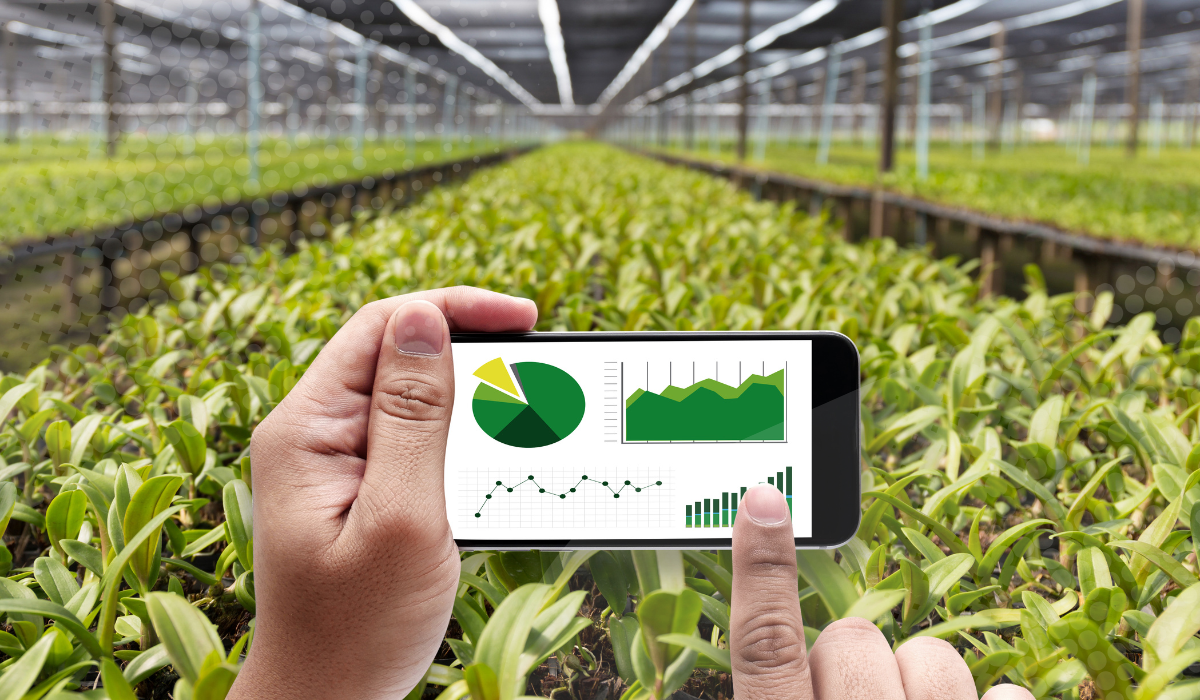
Cultiva+Tenerife: precision agriculture based on open data for sustainability and productivity
This proposal, developed by Roberto Chávez Trujillo, was the winning entry in the I Open Data Contest of the Cabildo de Tenerife: Ideas de Reutilización.
The initiative proposes the development of a precision agriculture platform that combines open data from the Cabildo of Tenerife with external sources, with the aim of offering personalized recommendations on what crops to plant, when to plant them and under what conditions to optimize their performance.
The agriculture sector in Tenerife
The primary sector plays a key role in the Canary Islands, both for its economic contribution and its impact on the conservation of the territory, biodiversity and local identity.
However, agriculture in Tenerife faces important challenges, such as optimizing the use of resources, the difficulty of planning crops based on real conditions, dependence on imports or the lack of accessible tools for data-based decision making. Added to this is the uncertainty derived from climatic and market factors, as well as the progressive abandonment of the sector.
The proposed solution
The proposed tool would allow farmers to harness the potential of data to improve decision making, optimizing the use of resources such as water or fertilizers and increasing agricultural productivity.
Through the integration of different sources of information, the platform would provide personalized recommendations tailored to each plot and context, facilitating more efficient planning and reducing uncertainty.
This approach contributes to a more sustainable, efficient and data-driven agriculture, while favoring food self-sufficiency and modernization of the sector.
Datasets used
The solution is based on the integration of multiple information sources, combining open data from the Cabildo de Tenerife portal with external data relevant to the agricultural field.
On the part of the Open Data portal, mainly sets related to are used:
- Meteorological data from the network of meteorological stations in Tenerife (temperature, humidity, rainfall or wind).
- Hydrological data, specifically on the water table and existing wells from the portal's data sets on the piezometric surface and groundwater abstraction works on the island.
- Data on daily prices of agricultural products(Daily prices of fruit and vegetable products in Mercatenerife 2024).
- Resources and activities related to the primary sector(Training activities of AgroCabildo).
- Geographical information of interest, such as the location of farms or agricultural businesses(Agricultural businesses in Tenerife).
These data would be complemented with key external sources, such as agronomic databases on crop requirements (e.g. Trefle), geographical and climatic information from IDECanarias (including solar radiation and land use), as well as data on local agricultural varieties from the Center for the Conservation of Agricultural Biodiversity of Tenerife(CCBAT). The integration of these sources allows the construction of a more complete and accurate information system for the generation of recommendations.
Target audience
The platform is oriented to different profiles of the agricultural sector.
On the one hand, small farmers who need support to improve the efficiency and profitability of their farms. On the other hand, larger-scale producers seeking to optimize resource management. In addition, it is especially useful for new profiles that want to join the sector, facilitating access to clear and data-based information.
Use case and functionalities
To illustrate how the platform works, Roberto's proposal presents the case of a farmer in the north of Tenerife who wants to start a new crop, but does not have enough information to decide which variety is the most suitable or what is the optimal time for planting.
The first step would be to access the platform, where the user can register and manage his profile, as well as centralize the information of his plots and consult relevant data for his activity.
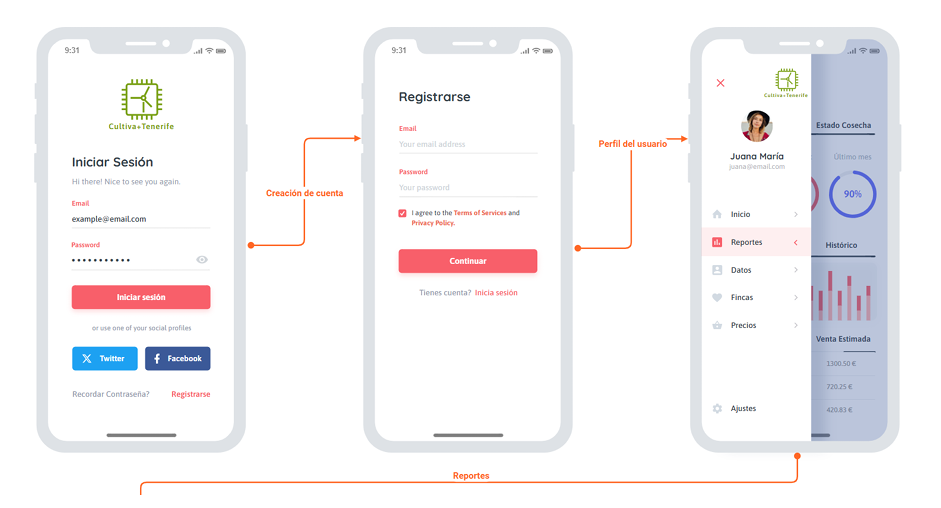
Once inside, the user can consult key information through dashboards and reports, as well as manage their plots, either by entering their data manually or by selecting them on a map.
From there, the platform can analyze each plot in detail, cross-referencing information such as climatic conditions, soil type or historical data, to generate personalized recommendations on crops, planting calendar or irrigation needs.
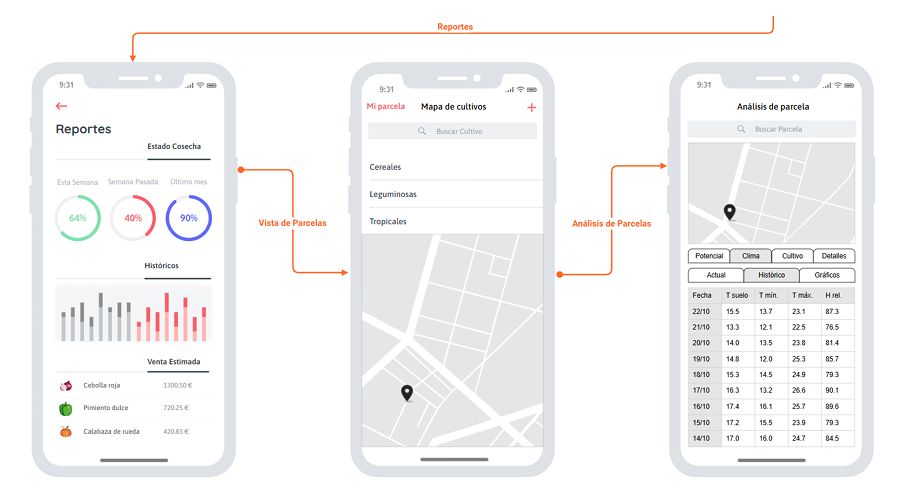
The platform would incorporate advanced functionalities such as the generation of crop recommendations adapted to each plot, planning by means of sowing and irrigation calendars, the configuration of alerts in the event of weather or market changes, and the consultation of information on unused plots that may represent new farming opportunities.
In this way, the farmer can make decisions based on real data, reducing uncertainty and improving the planning and efficiency of his agricultural activity.
This case is an example of the potential of open data to generate innovative solutions with real impact in key sectors such as agriculture. In addition to improving productivity, the proposal aims to contribute to a more efficient use of natural resources, favors sustainability and can help boost local production and reduce dependence on imports, moving towards a smarter agricultural model adapted to the island context.
Evolution and future potential of the solution
The "Cultiva+ Tenerife" proposal presents great potential for evolution through the incorporation of new data sets or other functionalities that expand its capabilities. Possible improvements include the integration of real-time data from IoT sensors on farms, satellite information for crop monitoring or more advanced predictive models based on artificial intelligence.
The incorporation of new open data sets related to land use, water consumption, biodiversity or agricultural markets would also be a possibility to enrich the recommendations offered by the platform.